How to Design a Small Home That Lives Large: 10 Interior Rules for ADUs and Stacked Flats
 Go to Feature
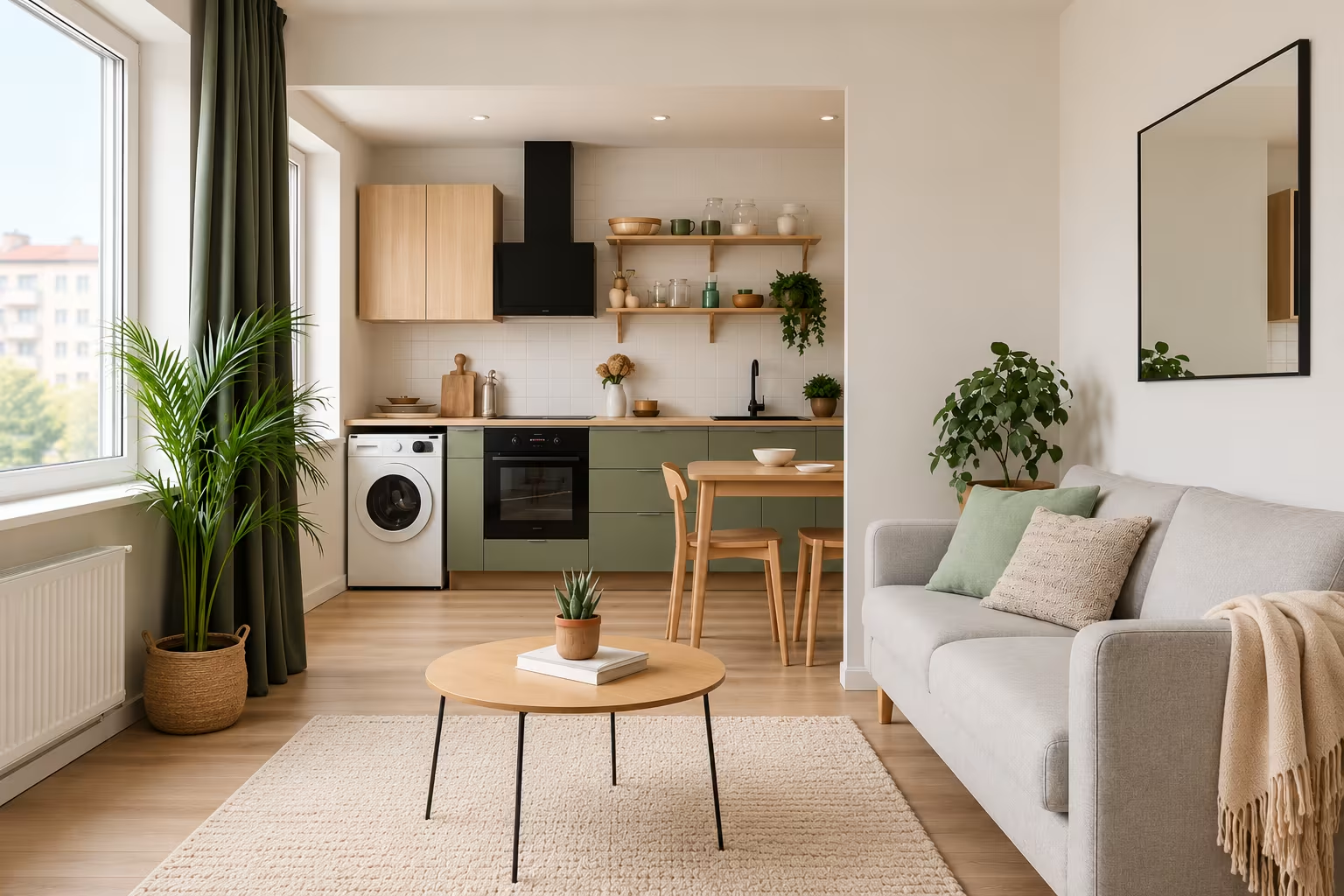
More Seattle-area households are building small. Backyard cottages, basement units, and stacked flats are now allowed on far more lots than a few years ago. State law requires cities and counties to allow two ADUs per lot in urban growth areas and bars them from capping ADU size below 1,000 square feet. With mortgage rates above 7% this fall, many families are choosing to add space for parents, adult children, or rental income rather than move.
Small homes can feel wonderful. They can also feel cramped, dark, and noisy if the interior is an afterthought. The difference is almost always in the design decisions made early. Here are the ten rules our interiors team follows when space is tight.
1. Design the furniture plan before the walls
In a small home, every inch of wall is either working or in the way. Lay out the sofa, bed, dining table, and desk at real dimensions before finalizing window and door locations. A window placed six inches off can kill the only good spot for a bed.
2. Make one room do two jobs, on purpose
The best small homes have rooms with clear double lives. A dining table that is also a desk. A living room with a daybed that hosts a guest. Plan outlets, lighting, and storage for both uses so the switch is easy.
3. Build storage into the architecture
Freestanding furniture eats floor space. Built-ins do not. Look for space:
- Under stairs and window seats
- Above doors and along hallways
- In toe kicks under kitchen and bath cabinets
- In full-height closets instead of half-height ones
A wall of shallow cabinets, even 12 inches deep, can hold an astonishing amount.
4. Choose sliding and pocket doors
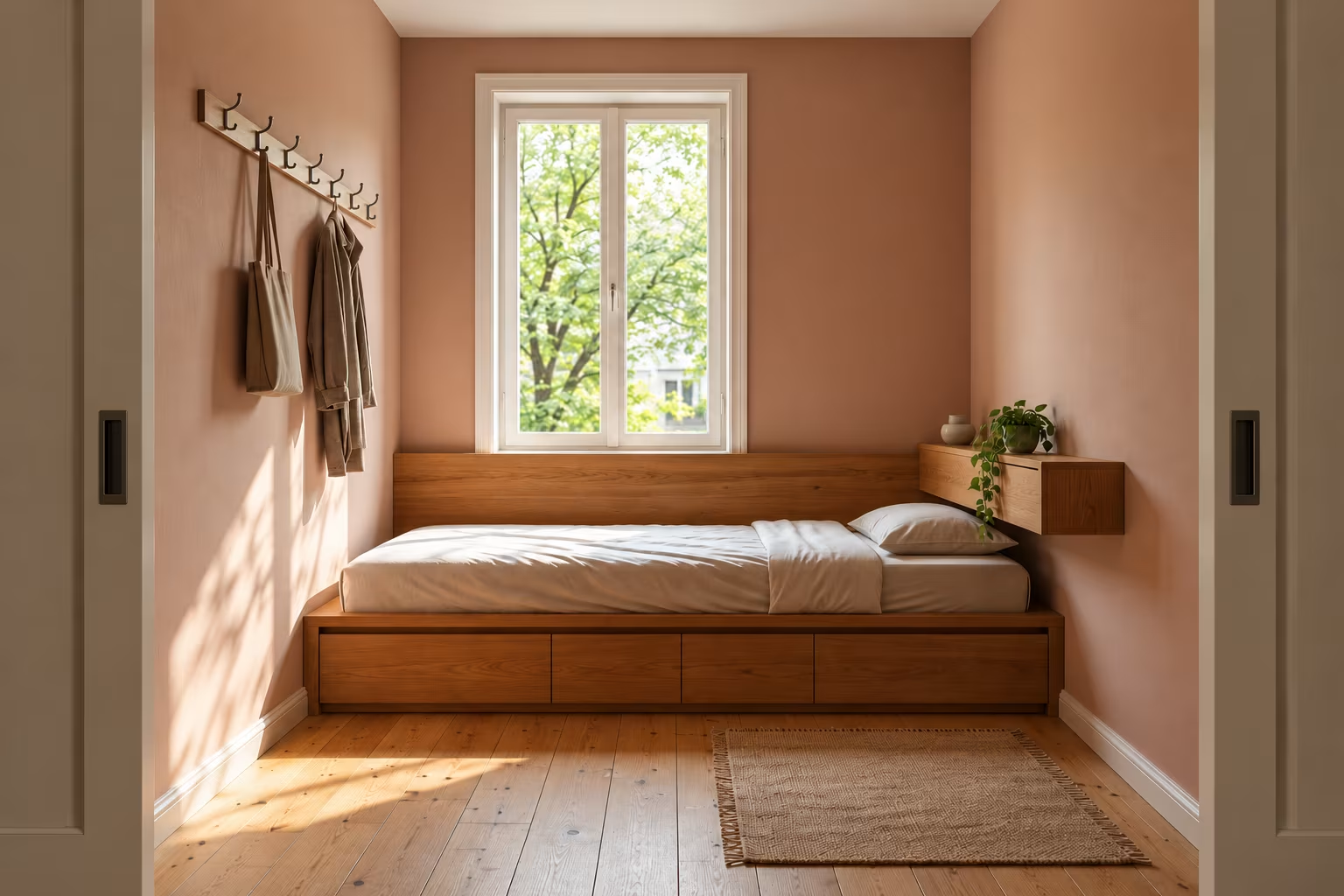
A swinging door needs about the width of the door in clear floor space. Pocket doors and barn-style sliders give that space back. Use them for bedrooms, baths, and closets, and add solid cores where privacy and sound matter.
5. Keep sight lines long
The eye judges size by how far it can see. Line up a view from the entry to a window, or through a kitchen to the yard. Glass transoms, interior windows, and lower kitchen uppers on one wall all help a small home read larger.
6. Go up, not out
Ceiling height is the cheapest square footage you will ever buy. A vaulted ceiling, a clerestory window, or a sleeping loft can make a 600-square-foot cottage feel generous. Tall storage uses vertical space too.
7. Pick a calm, consistent palette
Too many materials make small spaces feel busy. Choose two or three main finishes and repeat them. Run the same flooring throughout. Match cabinet and wall colors in places where you want things to disappear. Save bold color for one moment you love.
8. Plan for sound from day one
In stacked flats and attached ADUs, noise is the number one complaint we hear. Ask your architect about insulated walls and floors between units, resilient channels, and solid-core doors. Place bedrooms away from shared walls and stairs when you can. These are much easier and cheaper during design than after move-in.
9. Design for every age
Small homes often house people at the start or end of a long life, or several generations at once. Simple choices make a big difference:
- A zero-step entry where the site allows
- A bathroom with room to turn and blocking for future grab bars
- Lever handles and rocker switches
- Good lighting at stairs and entries
These details let a home serve a family for decades, not just years.
10. Light in layers
One ceiling fixture flattens a room. Layer ambient, task, and accent lighting so each zone of a small home has its own mood. Under-cabinet lights, wall sconces, and a dimmable fixture over the table can make 500 square feet feel like several distinct places. Warm color temperatures help through Seattle's gray months.
Bonus: Spend where hands touch
When budgets are tight, and with construction material costs still rising this year they often are, put money into what people touch daily: cabinet hardware, faucets, a good front door, durable flooring. Save on things that can be upgraded later, like light fixtures and decor.
Where to start
If you are just exploring
Measure the furniture you want to keep and list how each person will use the space. That list becomes your design brief.
If you have a plan in hand
Check it against these ten rules. Look especially at doors, storage, and sound between units.
If you are building for family
Talk openly about privacy, shared spaces, and how needs may change. Good design can hold both closeness and independence.
If you are renting it out
Design for durability and easy turnover. Choose finishes that clean well, give tenants a real place for coats, bikes, and rain gear near the door, and add a private outdoor spot, even a small patio. In the Pacific Northwest, a covered entry and a good spot to dry wet gear make a small home feel thoughtfully made.
Let's design your small home together
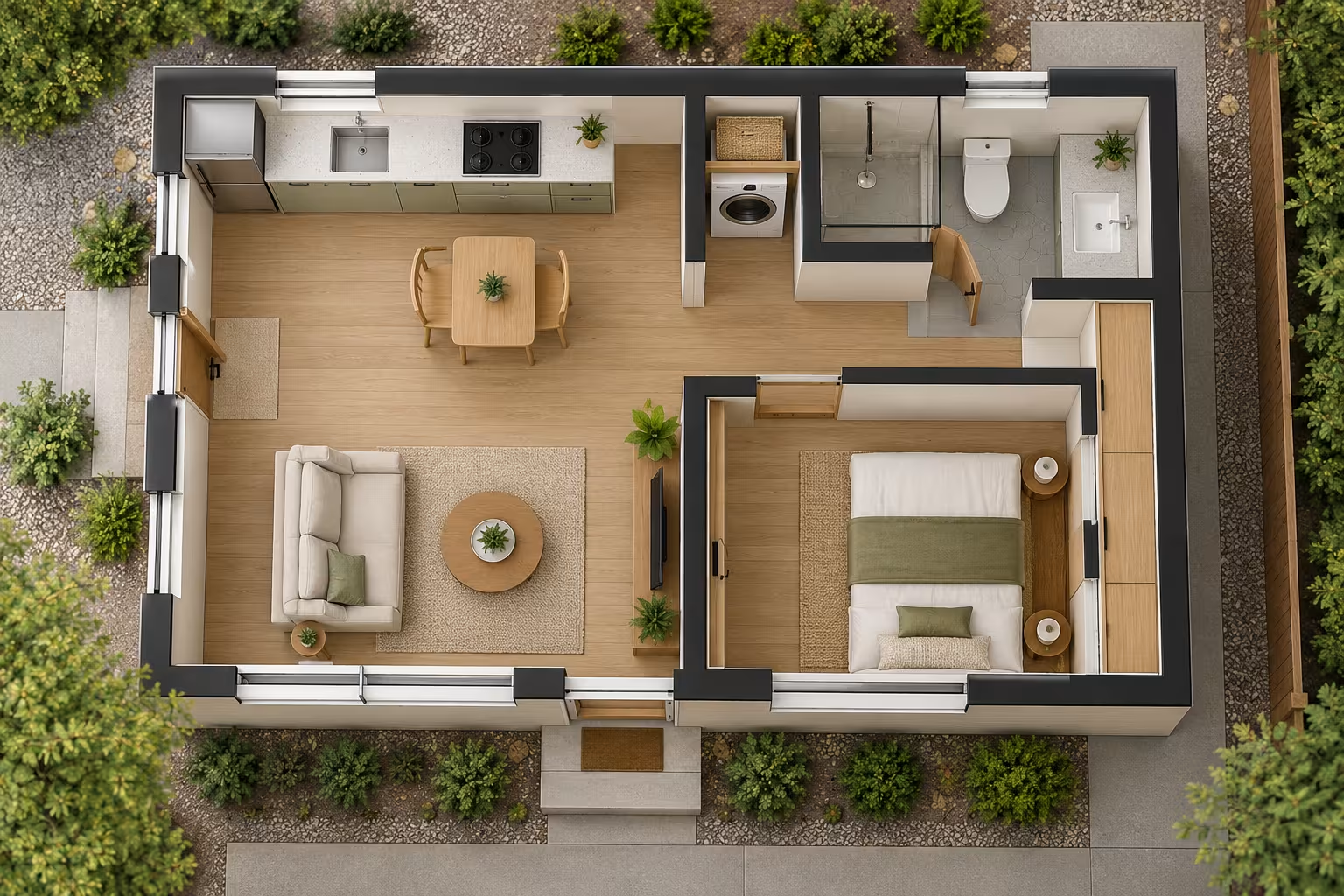
La Union Studio designs ADUs, backyard cottages, and stacked flats with interiors in mind from the first sketch. Whether you are housing family, creating rental income, or downsizing, book a consultation and we will help you plan a small home that feels like plenty.
FAQ
How big can an ADU be in Washington? State law bars cities and counties from capping ADU size below 1,000 square feet in urban growth areas. Local rules vary, so check with your city or county.
How do you make a small ADU feel bigger? Plan furniture early, use built-in storage, choose sliding doors, keep long sight lines to windows, add ceiling height where possible, and use a calm, consistent palette.
How can I reduce noise between stacked flats or an attached ADU? Plan insulated walls and floors between units, solid-core doors, and layouts that keep bedrooms away from shared walls. These are easiest to include during design.
Sources
MRSC: Accessory Dwelling Units · Trading Economics: US Mortgage Rates Climb Further in October (Freddie Mac data) · AGC: Construction Input Costs Climb 7.1% (Aug 13, 2026)
Media Hub
